
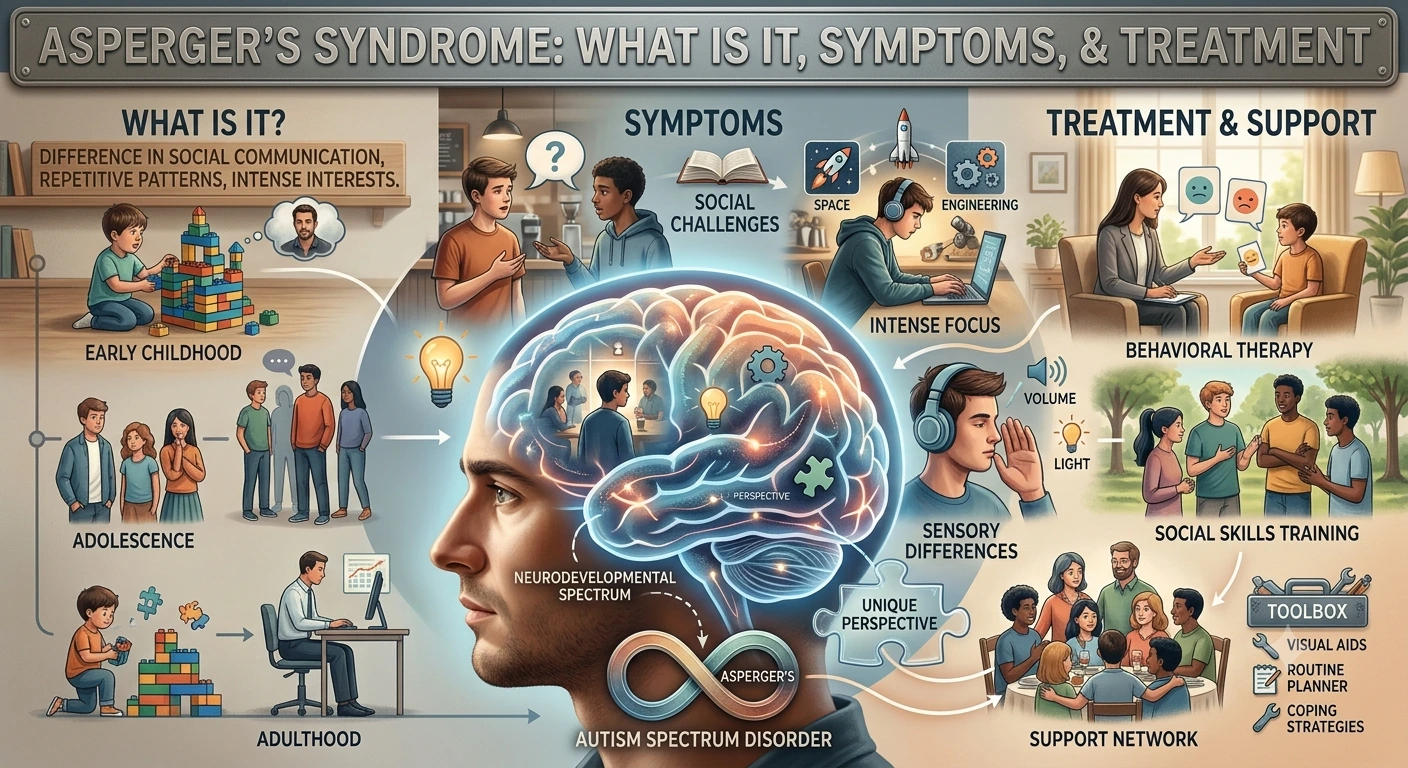
What Is Asperger’s Syndrome?
Asperger’s Syndrome is a condition that disturbs how one person talks or learns and gets along with other people. It’s now considered a part of Autism Spectrum Disorder (ASD). The people with Asperger’s typically have normal or high intelligence and learn to speak at normal age.
But, they may find out it hard to understand to the social situations, body language, jokes or sarcasm. They frequently enjoy the same routines or may have a strong interest in one topic. Each person is different or may require different levels of support. With the correct care or therapy and encouragement then they can do well at school, work and in everyday life.
What Is the Difference Between Asperger’s Syndrome and Autism Spectrum Disorder?
In the past, Asperger’s Syndrome was diagnosed as a separate condition. Today, it’s included under Autism Spectrum Disorder (ASD). The medical name has changed but a lot of people still use the term Asperger’s just due to its familiar to them or describes to their experiences.
Main differences:
- AS is now part of ASD.
- People with Asperger’s typically develop usual language skills.
- They frequently have average or above-average intelligence.
- Some people with ASD may have delayed speech.
- Some people with ASD may have learning problems.
- Both can make social communication tougher.
- Equally may include repeated behaviors or a preference for routines.
- Some doctors now use the term ASD without language or intellectual impairment.
Although the official diagnosis is now Autism Spectrum Disorder then many people still choose to use the term Asperger’s as it feels more familiar and personal.
What Are the Symptoms of Asperger’s Syndrome?
Symptoms of Asperger’s Syndrome aren’t the same for everybody. Some children have only a few symptoms while others have more. The signs frequently appear when children are young particularly when they start to school or spend more time with other people. The children with Asperger’s typically have normal or high intelligence, but they may find out it tough just to talk with others or know to social situations and deal with changes.
Difficulty Making Friends
Children may find out it hard to make friends or join to group activities. They may like to play only and may not know how to keep a discussion going.
Communication Problems
Some children may speak in a changed way. They may talk a lot about one topic and find it hard to recognize jokes, body language or sarcasm.
Strong Interests
Several children become very interested in one subject. They may spend a lot of time learning or speaking about that topic.
Likes Daily Routine
Children frequently like doing things the same way each day. Minor changes in their routine can make them feel worried or upset.
Sensitive to Sights, Sounds or Touch
Bright lights, loud noises, strong odors or certain clothes may make them feel uncomfortable.
Repeated Actions
Some children may repeat the same movements or follow the same habits each day and arrange things in a certain order.
Recognizing to these signs early can help children get the right support. With the right care, therapy or family support, people with AS can learn new skills, do well in school or enjoy happy and independent lives.
What Causes Asperger’s Syndrome?
The exact reason for Asperger’s Syndrome is not known. The professionals believe it happens just due to a combination of genes and the way the brain develops. It’s not caused by the bad parenting or food and things that happen after a child is born. The scientists are still studying that why some children develop Autism Spectrum Disorder (ASD). The research has clearly shown that vaccines do not cause AS or Autism Spectrum Disorder.
Genetics: Asperger’s can run in families. Certain genes may increase to the chance of developing Autism Spectrum Disorder.
Brain Development: Changes in how the brain grows may disturb communication or social skills, behavior or learning.
Pregnancy and Birth Factors: Some factors throughout pregnancy or birth may slightly increase to the chance of autism but they don’t directly cause AS.
Environmental Factors: Scientists are studying that whether things that happen before birth may have an effect but no single environmental cause has been proven.
No Link to Vaccines: Many studies have shown that vaccines do not cause AS or Autism Spectrum Disorder.
Although the real cause is still unknown then early diagnosis or the correct support can help children to recover their communication, social or everyday living skills. The researchers continue to learn more about Asperger’s to offer better care and support for children and their families.
How Doctors Diagnose Asperger’s Syndrome?
Diagnosing Asperger’s Syndrome can take time as there is no single test that can confirm it. The doctors gather info from parents, teachers and caregivers to learn how the person acts at home, at school and with other people. They look at the person’s communication or social skills and overall development for their age. Doctors may also use simple questionnaires, interviews or other assessment tools to understand the person’s desires better.
Sometimes, hearing, vision or language tests are done to make certain another condition isn’t causing the signs. A careful assessment helps doctors make the correct diagnosis and make a support plan that matches the person’s strengths, challenges or everyday desires.
Treatment Options for Asperger’s Syndrome
There is no cure for Asperger’s Syndrome but a correct treatment and support can help people learn to new skills and live more independently. The key goal of treatment is to improve communication or social skills, emotional control and everyday life skills. Since each person is different than treatment is planned to center on their individual needs or may change over time.
Treatment may include:
Behavioral Therapy – This helps to improve communication, social skills, emotions or behavior.
Speech and Language Therapy – It also helps to recover talking or listening, understanding body language and taking turns in discussions.
Occupational Therapy – It helps recover hand movements, manage sensitivity to sounds or touch and learn everyday life skills.
Social Skills Training – It teaches how to make friends, know social situations and solve to social complications.
Cognitive Behavioral Therapy (CBT) – It helps to manage anxiety or tension, sadness or strong emotions.
Educational Support – Schools may provide additional learning help, classroom support and individual learning plans.
Family Support and Training – Caregivers and Parents learn how to support their child at home better.
Medication – No medicine cures Asperger’s but doctors may provide medicine to help with difficulties like anxiety, ADHD or depression if required.
With early support, consistent therapy and help from family and teachers then many people with Asperger’s can do well at school or build friendships and live contented or independent lives.
When Is It Time to Speak with a Doctor?
It is best to get assistance as early as possible as a child’s brain is still growing and learning. If you notice to signs of AS or Autism Spectrum Disorder (ASD) then speak to your child’s doctor. They can refer your child to a specialist for full check-up. You should also seek help if your child has trouble making friends and avoids eye contact, finds social situations unclear or repeats to the same behaviors, has very strong interests, gets distressed when routines change or has communication and sensory complications which affect regular life.
The adults who notice to these signs in themselves should also speak to the healthcare professional. Getting an early diagnosis can help to people get a right therapy or support and guidance to improve the communication or social skills, confidence or everyday living skills?
Final Thoughts on Asperger’s Syndrome
In conclusion that Asperger’s Syndrome is a lifelong condition but people with it can still live contented and successful lives. With the correct support or understanding and care from Wonder Star ABA, then children and adults can learn to new skills or make friends and become more independent. Every person with is actually different and has their own strengths or interests and talents.
Parents, teachers, and healthcare professionals can all help children grow with confidence. Learning about Asperger’s Disorder symptoms, getting an early Asperger’s Disorder diagnosis, and choosing the right Asperger’s Disorder treatment can make everyday life easier. Programs offering applied behavior analysis Maryland families can access provide structured, evidence-based support that helps children build key life skills, gain confidence, and enjoy a better quality of life.