
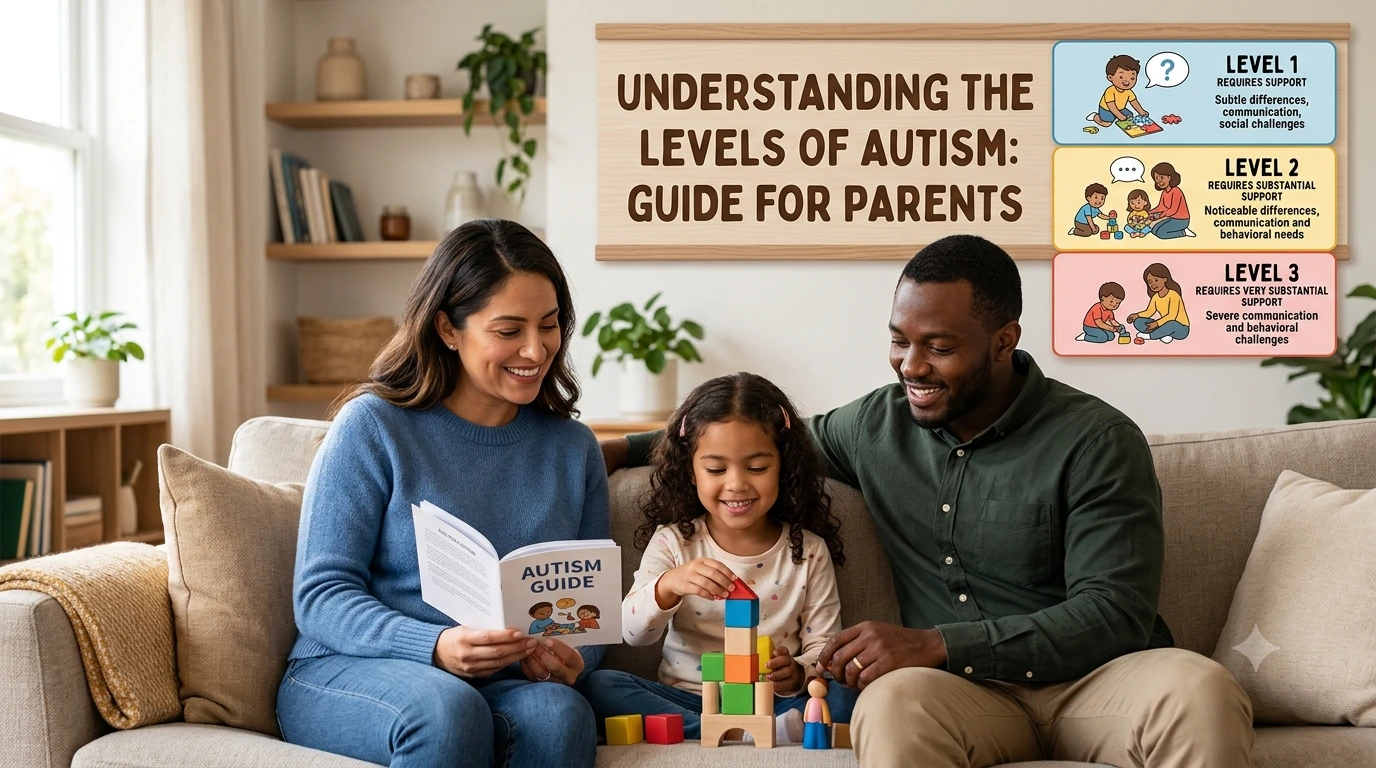
Autism Spectrum Disorder (ASD) is a developmental disorder that impacts an individual’s ability to communicate, interact with others, and experience the world around them. All autistic people are unique. Some people may require just a little assistance in daily living, while others may require a lot of assistance in communication, learning, and daily living.
Due to the uniqueness of each individual with autism, it is possible to describe the level of support a person may require in terms of three levels of Autism. These levels are not used to measure a person’s intelligence or potential. Rather, they assist families, teachers, and health care professionals in understanding what kind of assistance might be most helpful.
In this blog, we will try to make the three levels of autism understandable and talk about what changes in social communication and restricted or repetitive behaviors can emerge at each level.
Severity Levels for Autism Spectrum Disorder
The Diagnostic and Statistical Manual of Mental Disorders classifies autism into three levels depending on the level of support an individual requires. They are known as Level 1, Level 2, and Level 3.
It is important to remember that the support a person may need may vary with time as the person learns new skills or receives therapy and support.
Level 3 Autism: “Requiring Very Substantial Support”
The highest level of support is Level 3 autism. People at this stage may experience severe communication or functional impairments. Usually, they need continuous support in a variety of areas of life.
Social Communication
Individuals who are diagnosed with Level 3 autism might have limited verbal communication or none at all. May have a hard time initiating or sustaining conversations and may not react to social interactions as they are expected. Not only can it be difficult, but it can also be difficult to make eye contact, understand facial expressions, or form relationships.
There are various methods of alternative communication, including picture boards, communication devices, or sign language. With the appropriate support, they can communicate, get their needs met, and engage in social interactions.
Restricted and Repetitive Behaviors
Behaviors are more apparent at this level and are restricted and repetitive. Some examples include doing the same actions over and over, sticking to a specific routine, or becoming quite upset when daily activities are altered. Some people can be very sensitive to sounds, lights, or textures. These behaviors can impact daily activities and frequently need ongoing support.
Level 2 Autism: “Requiring Substantial Support”
Those with Level 2 autism typically require more assistance than those with Level 1 autism, but less than those with Level 3. May be able to talk or talk in short sentences, but can see and feel that there are difficulties in social situations.
Social Communication
At Level 2, people might struggle with understanding social rules or having back-and-forth conversations. May have difficulty understanding body language, facial expressions, or tone of voice. It can also be difficult to make friends and to join in with groups.
They may wish to socialize and interact, but may require guidance to develop their social and communication skills.
Restricted and Repetitive Behaviors
Repeated actions are common and can hinder everyday activities. These can involve an individual repeating a few words, repeating actions, and being very interested in specific things. Routine changes and new settings can lead to stress or anxiety, and extra time may be required to adapt.
Structured routines, visual schedules and supportive teaching strategies can assist many of these people to feel more confident and comfortable.
Level 1 Autism: “Requiring Support”
The mildest autism is referred to as Level 1 autism; however, this doesn’t imply they have no challenges. With support in some situations, people with Level 1 can live on their own, attend school, and go to work.
Social Communication
People with Level 1 autism typically have speech and are fairly able to communicate. But they can sometimes experience difficulties or find social interaction draining. May struggle with starting conversations, understanding jokes or sarcasm, eye contact, or social cues.
Some people like spending time alone or may not be able to make and keep friends. Familiarity with the social situation and a relaxed environment are important to avoid stress.
Restricted and Repetitive Behaviors
Autistic people at Level 1 may be very interested in specific topics or be fond of routines. They can feel frustrated if plans change and when unexpected events happen. Others may have mild sensory sensitivities that cause discomfort when listening to certain sounds or feeling uncomfortable in certain clothes or in a crowded area.
While these behaviors may not be as obvious as with Levels 2 and 3, they could still impact or interfere with everyday functioning and should not be ignored.
Why Understanding Autism Levels Matters?
Knowledge of the various autism levels benefits families, educators, and health care professionals by providing appropriate support for each person. Its purpose isn’t to restrict and limit what a person is able to do; it’s about identifying the resources and strategies that will enable the individual to be successful.
All individuals with autism are different in their strengths, interests, and abilities. Some families may require assistance with communication, others may require assistance in fulfilling daily activities, and others may require assistance with sensory issues. All of these can have a positive impact, such as early intervention, individual therapy, family involvement, and supportive environments.
Final Thoughts
The 3 severity levels are simply indicators of the level of support that a person may require, and not an indication of value or potential. A person with level 1, level 2, or level 3 autism is deserving of understanding, respect, and the opportunity to achieve their goals.
Many autistic people go on to learn vital life skills, develop close relationships, and engage effectively in school, work, and in the community with support. Through applied behavior analysis Maryland, services can be tailored to each individual’s strengths, with a focus on their interests to help them build independence and live rich, fulfilling lives.”