
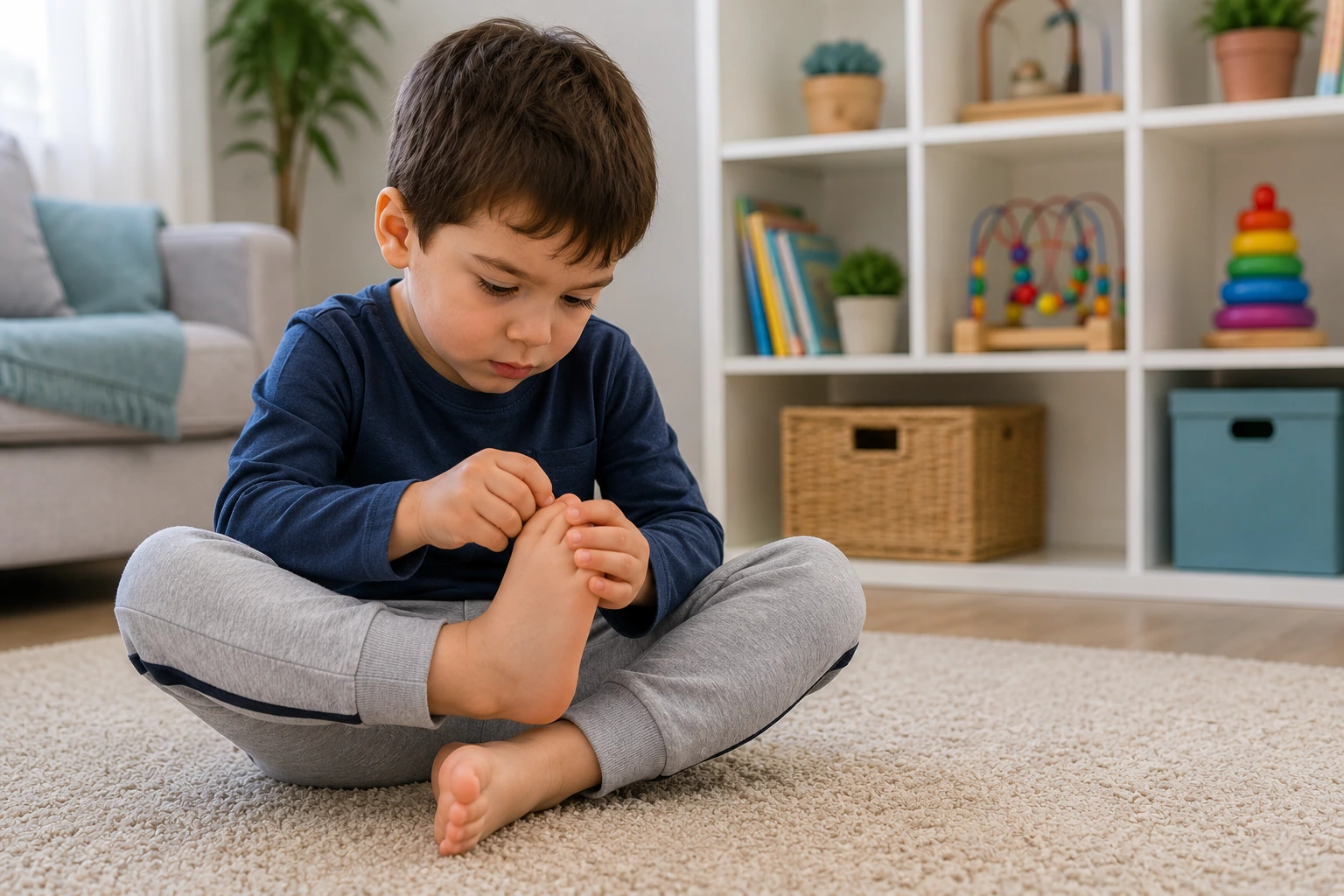
Consider the case when you start noticing that your kid focuses exclusively on feet. They may look intently at people’s feet, want to walk around barefoot all the time, touch their toes frequently, and be extremely interested in various footwear.
For any parent, such a situation may be quite puzzling. The natural question is whether such an obsession is just a temporary phase in development or a symptom of autism. Autistic children often have very peculiar hobbies and habits which may confuse other people. If some children like trains or math, others may be obsessed with their feet.
Fortunately, the link between autism and feet obsession does not mean any immediate problems. Such behaviors often indicate how an autistic child views reality through their sensory experience. This is useful knowledge when trying to understand your child’s behavior.
This article will guide you on the causes of this behavior in children with autism, its impact on their lives, and how to deal with this issue in order to help your child.
What Is Foot Obsession in Autism?
A foot obsession is a strong preoccupation with feet that may be manifested in touching, looking at, or rubbing feet against each other. Some children play with their toes. Others fixate on someone else’s feet instead of their own. For some children, this interest crowds out almost everything else at the moment.
This isn’t random. Autism Spectrum Disorder (ASD) alters the way the brain interprets sensory data. Coincidentally, feet have many nerves. CDC reports that those with ASD have challenges in social interactions and restricted/repetitive behavior.
People with ASD tend to perceive their surroundings using a different learning method, movement, or attention. Feet are only one area in which that is observable.
Some kids find comfort in a soft blanket. Others find it in the feel of rubbing their soles together. It’s a sensory preference, not a defect. You can explore more about this idea further in Autism vs Sensory Processing Disorder. It looks at how sensory differences shape daily life.
Why Does Foot Obsession Happen? Three Real Reasons
No two autistic children are the same. So no single explanation covers every case. However, there seem to be some consistent reasons based on both scientific study and experience.
1. Sensory Sensitivities
Autistic brains sometimes interpret physical stimuli differently from typical brains. Some kids have extreme sensitivity to particular textures and sounds. Other kids crave physical sensations more than avoid them.
Feet have a heightened sense of sensation and respond to pressure and texture through nerve endings. For a kid who craves physical sensation, touching his feet is a reliable source of stimulation.
2. Repetitive Behavior Patterns
Repetition is one of the hallmarks of autism. The CDC lists it as a hallmark of ASD. Researchers define repetitive behaviors as rigid, apparently meaningless actions performed by the child.
However, they fulfill a necessary need for the child, even if they get in the way of regular activities. Feet are always accessible and constantly provide opportunities for interaction. Fixating on something predictable gives a child a sense of control.
3. Comfort and Self-Regulation
This is the big one. Foot-focused behavior is often a form of stimming, or self-stimulatory behavior. Stimming allows the nervous system to become calm and process emotions. According to scientists from the University of Rochester Medical Center, repetitive actions allow individuals to cope with an abundance of sensory stimuli.
It also allows them to control their emotions. This behavior is usually safe, but science has yet to learn everything about stimming. You can explore more about stimming in “What Stimming Means in Autism Explained”.
Rubbing feet in bed before sleep is similar to rhythmic rocking or white noise. This practice relaxes the body and makes it ready for sleep. It’s not a red flag. That’s a coping tool your child figured out on their own.
Is Foot Obsession the Same as Toe-Walking?
Parents often lump every foot habit into one category. But foot obsession, foot stimming, and toe-walking are related, not identical.
Foot obsession means an intense fascination with feet as objects. Foot stimming is more about repetitive motion, like tapping or rocking on the feet. Toe-walking is a motor pattern, where a child walks on their toes instead of flat-footed. It’s often linked to muscle tone or sensory processing, not fascination.
None of these alone confirm autism. But when they appear alongside other traits, like social communication challenges, they form a bigger picture. That picture is worth discussing with a professional.
How This Affects Everyday Life?
Foot obsession is not dangerous on its own but can cause problems depending on the circumstances and location. A social environment is where foot fetishism is usually more evident.
Peers and adults might not comprehend why a kid focuses on feet or tries to touch someone else’s foot. This misunderstanding might be translated into teasing or embarrassing situations. This will also have an impact on the speed of making new friends.
Safety issues become another problem that people encounter. Some kids refuse to wear shoes because they prefer certain textures. That becomes dangerous during the summer heat and cold winter days.
Other kids have a habit of rubbing their feet excessively, which causes calluses. This doesn’t imply anything is “wrong” with your kid, but the behavior should be structured.
There’s a Real Upside Here Too
It’s easy to focus only on the challenges. But intense interests, including foot fascination, aren’t purely negative. Researchers writing for Spectrum News note that deep, focused interests can shape learning and build wellbeing. They may even lead people to satisfying careers in later years.
The famous Temple Grandin is a good example of a successful adult with autism who has used her obsession with details to excel in the field of animal sciences. Autistic adults have stated that their unique preoccupation helped them succeed in detail-oriented jobs.
The point here is not to take away your kid’s preoccupations but to show them how to express these preoccupations without interfering with everyday life.
How Parents Can Help a Child Obsessed With Feet?
Help comes much more easily when it is organized and systematic. Occupational therapy is normally the first stage here; the therapist helps a child find other sources of sensory stimulation. Over time, this can ease the intensity of a foot fixation.
Behavioral support through ABA is another strong option. Applied Behavior Analysis is one of the most researched interventions for repetitive behaviors. A qualified ABA therapist in Maryland can help a child build replacement behaviors.
This means teaching them when foot-focused stimming is fine, like at home. It also means guiding them toward more flexible options in public. It’s not about suppressing your child. It’s about giving them more tools.
Social stories and communication tools help too. Simple stories walk a child through social expectations clearly. Other tools, such as the Picture Exchange Communication System (PECS), help non-verbal children communicate their needs.
Predictability is much more important than one can imagine. Schedule certain times of sensory breaks, such as a period of foot rubbing. Predictability will allow the child to learn about limits without punishing him/her. Physical activities are equally helpful. Sensory play, such as playing in water or on a trampoline, is beneficial too.
When Should You Talk to a Doctor?
Foot fixation alone usually isn’t a medical emergency. But a few signs suggest it’s time for professional input.
- The behavior causes skin injury or bleeding that doesn’t heal.
- Your child refuses shoes in situations where safety is a real concern.
- The fixation appears alongside other developmental differences, like delayed speech.
- The behavior escalates suddenly and starts interfering with school or sleep.
A pediatrician is always a good starting point. They can rule out unrelated causes and refer your family to a specialist if needed. You don’t need all the answers before making that call.
Acceptance Matters Just as Much as Intervention
Your child’s fascination with feet isn’t a flaw to fix. This is how their body interprets the world through their mind. The attempt to get rid of it may only lead to increased anxiety.
The most productive strategy combines structure with acceptance. Create boundaries where it makes sense, such as setting boundaries about touching someone else’s feet without permission.
Provide your child with space to stim privately. This will help your child realize that there is a place for their needs while respecting the world’s limitations.
FAQ’s
What are the most common obsessions in autism?
Common special interests include trains, numbers, specific animals, and patterns. Feet make the list too. These fixations often bring comfort and genuine joy.
Why do autistic kids like to be barefoot?
Bare feet often feel less overwhelming than shoes and socks. Skin-to-surface contact can feel calming and easier to process.
What is feet stimming?
Feet stimming means repetitive foot movements, like tapping or rocking. It’s one form of self-stimulatory behavior seen in autism.
Why do children with autism rub their feet together?
This motion provides calming, rhythmic sensory feedback. It helps some children manage anxiety or prepare for sleep.
Does foot fixation mean my child is definitely autistic?
No. Foot-related behaviors alone don’t confirm a diagnosis. They matter more when paired with other developmental signs.
You Don’t Have To Figure This Out All By Yourself
Each autistic child perceives the world in their own unique way. Foot obsession is just one small part of that greater whole. Patience and proper guidance can make all the difference between confusion and confidence.
At Wonder Star ABA, we work alongside your family wherever you are in Maryland. We design customized ABA treatment programs that address sensory needs, communication, and routine needs. If you’re looking for compassionate guidance, reach out to our ABA therapists in Maryland now.
References:
- CDC: About Autism Spectrum Disorder
- CDC – Clinical Testing and Diagnosis for ASD
- University of Rochester Medical Center: What New Research Reveals About Autism, Stimming, and Touch
- NCBI/PMC: Repetitive Restricted Behaviors in Autism Spectrum Disorder
- Spectrum News: The Benefits of Special Interests in Autism