
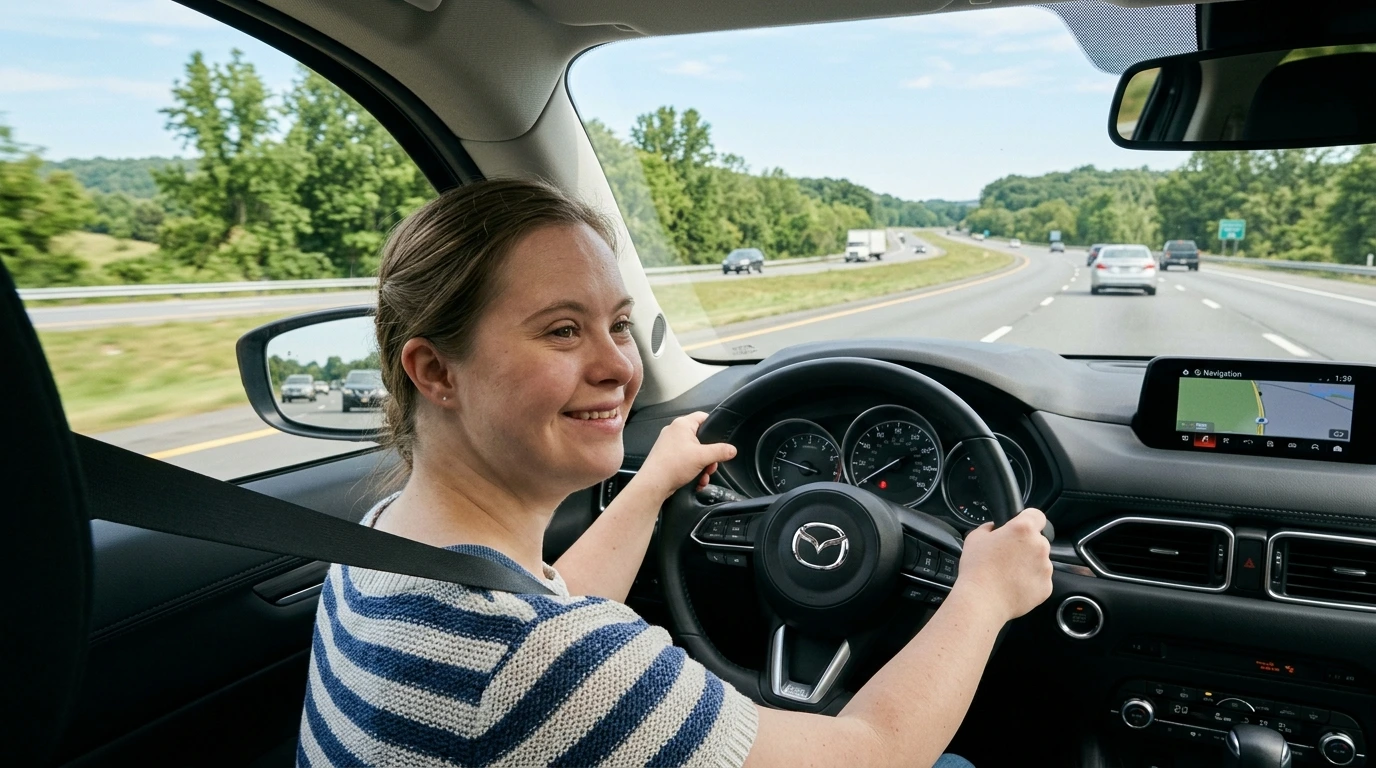
Yes, some people with Down syndrome can learn to drive safely. Having down syndrome doesn’t mean that someone can’t drive. It depends on their ability just to pay attention or make safe choices, see clearly, control the car or follow to traffic directions. Some people may be able to drive on their own while others may require additional driving lessons or support.
Some may also choose other ways to travel, especially if driving isn’t the right fit. For individuals working through skills like this, Applied Behavior Analysis can help build the judgment and responsibility needed to handle a task like driving safely. The most important thing is whether the person can drive safely and manage the responsibilities that come with it.
Can a Person With Down Syndrome Get a Driver’s License?
A person with Down syndrome may be able only to get a driver’s license if they can drive safely or meet to local requirements. Having Down syndrome doesn’t mean that a person can’t get a license. Each person has different abilities.
- Follow the rules: They must meet the same basic driving requirements as everyone else.
- Pass tests: They may want to pass written or vision and driving tests.
- Have an assessment: Some people may require a medical or driving skills check.
- Drive safely: They need good attention or judgment, coordination or knowledge of traffic instructions.
With good training and support then some people with Down syndrome can become safe drivers. Others may want additional help and use other ways to travel.
What Skills Are Needed for Safe Driving?
Safe driving means more than knowing how to drive a car. A driver needs to pay attention, make safe choices, and react quickly to what’s happening on the road. This can be especially important for drivers with Asperger’s Syndrome, who may benefit from extra focus on these skills to help prevent accidents and keep themselves and others safe. Every driver should also stay aware of traffic rules and remain calm in surprising situations.
Important skills include:
- Attention: Pay attention to cars or signs, people or the road.
- Good judgment: Notice to dangers and make safe selections.
- Quick reaction: React fast if a car stops and something unexpected happens.
- Coordination: Use the steering wheel or brakes and gas pedal appropriately.
- Traffic rules: Recognize road signs or traffic lights, speed limits and right-of-way rules.
- Memory: Recall key driving rules.
- Vision: See signs or cars, people and objects clearly.
- Following directions: Understand and follow directions while driving.
Having trouble with one skill doesn’t each time mean a person cannot drive. A professional assessment and proper training can help determine that whether the person can drive safely. Additional practice and support may also help recover driving skills and confidence.
Does Down Syndrome Affect Driving Ability?
Down syndrome may disturb to some skills required for driving such as attention or memory, coordination or decision-making. But each person is actually different. Some people may learn just to drive safely with additional help while others may have more difficulty. They may want more time and practice just to learn driving skills. Simple instructions, repeated practice, visual reminders or driving in quiet areas can help. A driving instructor with experience working with people with developmental disabilities may also be helpful.
Before letting a teen drive alone, parents should confirm they can follow traffic rules, understand road signs, stay focused, control the car and react safely to unexpected situations. Effective strategies for parents include an expert driving test or assessment to help determine if the person is truly ready to drive securely.
Why Driving May Be More Difficult for Some People With Down Syndrome?
For some people with Down syndrome then driving may be tough as it requires many skills at the same time. They may need more time and practice to learn. But that doesn’t mean they cannot drive safely.
A person may have trouble with:
- Paying attention to many things at one time
- Recalling driving steps
- Making fast choices in heavy traffic
- Understanding difficult road situations
- Remaining calm in new situations
- Finding their way in new places
- Knowing how far away things are
- Knowing how quickly other cars are moving
- Reacting fast to sudden dangers
Additional driving lessons or simple directions and practice in silent places can help. A driving test or professional assessment can also show what support the person needs to drive safely.
How Can Someone With Down Syndrome Learn to Drive?
Some people with Down syndrome can learn to drive with the correct help or training. They may want more time and practice. Learning step by step can make driving easier.
- Start with basic skills: Learn that how to use the pedals or steering wheel, signals and mirrors in a safe place.
- Use a good driving instructor: A trained instructor can give clear directions and extra help when needed.
- Practice step by step: Start in an empty parking lot then practice on quiet streets, gradually moving to busier roads.
- Practice often: Repeating to the same driving skills can help the learner recall them and feel more confident.
- Give simple instructions: Teach one step at a time instead of giving many instructions at one time.
With time, practice and support then a person can recover to their driving skills. Safety should always come first.
What Health Issues Should Be Considered?
Health problems can disturb safe driving. A person with Down syndrome may have complications with vision or hearing, sleep or medicines which can make driving tougher. Poor eyesight can make it tough to see road signs while hearing complications may make it harder to hear horns or other sounds. Sleep complications can cause exhaustion or make it harder to stay focused.
Memory, attention, movement, or behavior problems may also affect driving. Consistent health checkups can help manage these complications. If a new health problem develops, the person should talk to a doctor and see whether they can still drive safely. Applying a Task Analysis in ABA approach, breaking driving down into smaller measurable skills, can help evaluate specific strengths and gaps. Driving ability should focus on the person’s health, skills, and safety, not just having Down syndrome.
What If a Person With Down Syndrome Cannot Drive?
Not being able to drive doesn’t mean a person can’t be independent. Many options exist for getting to work or school, appointments, shops and social activities.
- Public transportation: Buses and trains can help with everyday travel.
- Paratransit: Special transportation may be available for people who need additional help.
- Family help: Family members can offer rides when required.
- Ride services: Taxis and other ride services can be used for trips.
- Community programs: Some local programs provide free or low-cost rides.
- Walking or cycling: These can be good for short and safe trips.
- Work programs: Some workplaces or community groups may provide transportation.
With good planning and support then a person who can’t drive can still work, study, meet friends and live an active life.
What Are the Signs That Someone May Not Be Ready to Drive?
Some people with Down syndrome may require more time to learn that how to drive. If they frequently have problems while learning, then they may need more practice or a driving test.
- Overlooking simple traffic rules
- Getting confused on the road
- Missing symbols or traffic lights
- Having trouble controlling the car
- Taking too long to react to danger
- Getting distracted effortlessly
- Feeling scared or panicked in new situations
- Having trouble following instructions
- Finding it hard to judge the distance between cars
Making one mistake throughout a driving lesson doesn’t mean a person cannot drive. But if the same safety problems happen frequently then they should be taken seriously. A professional driving test can show whether the person needs more practice or whether driving may not be safe for them.
Can People With Down Syndrome Drive Safely?
Yes, some people with Down syndrome can drive safely if they have the skills to control a car and follow to traffic directions. Each person is different so Down syndrome alone doesn’t mean somebody can’t drive. Key skills include paying attention or remembering rules, making safe choices, controlling the car, seeing and hearing well and reacting quickly. It’s important to understand how the person handles traffic, follows road signs, stays calm and manages unexpected situations.
Some people may want more lessons or extra practice and simpler teaching methods before driving alone. A professional driving test can help them check to their skills and show what they want to improve. The families should focus on person’s actual abilities instead of making assumptions. If driving isn’t safe then buses, family rides or other transportation services can still benefit the person to travel to work, school, appointments, and social activities and stay independent.
Final Thoughts
To conclude that people with down syndrome can drive if they have the skills to drive safely. Having Down syndrome doesn’t always mean a person can’t drive. Each person is different so their driving skills should be assessed that based on their abilities.
Learning to drive may take more time and practice. A professional driving instructor, simple directions, or consistent practice from Wonder Star ABA can help a person learn or feel more confident behind the wheel. A driving test or evaluation can also show whether driving is safe.
If driving isn’t safe for somebody then other transportation options can still help them to stay independent. Buses, trains, family members or other services which can help them just get to work or school, appointments, shops or social activities. The main aim is to help the person live a safe or confident and independent life.