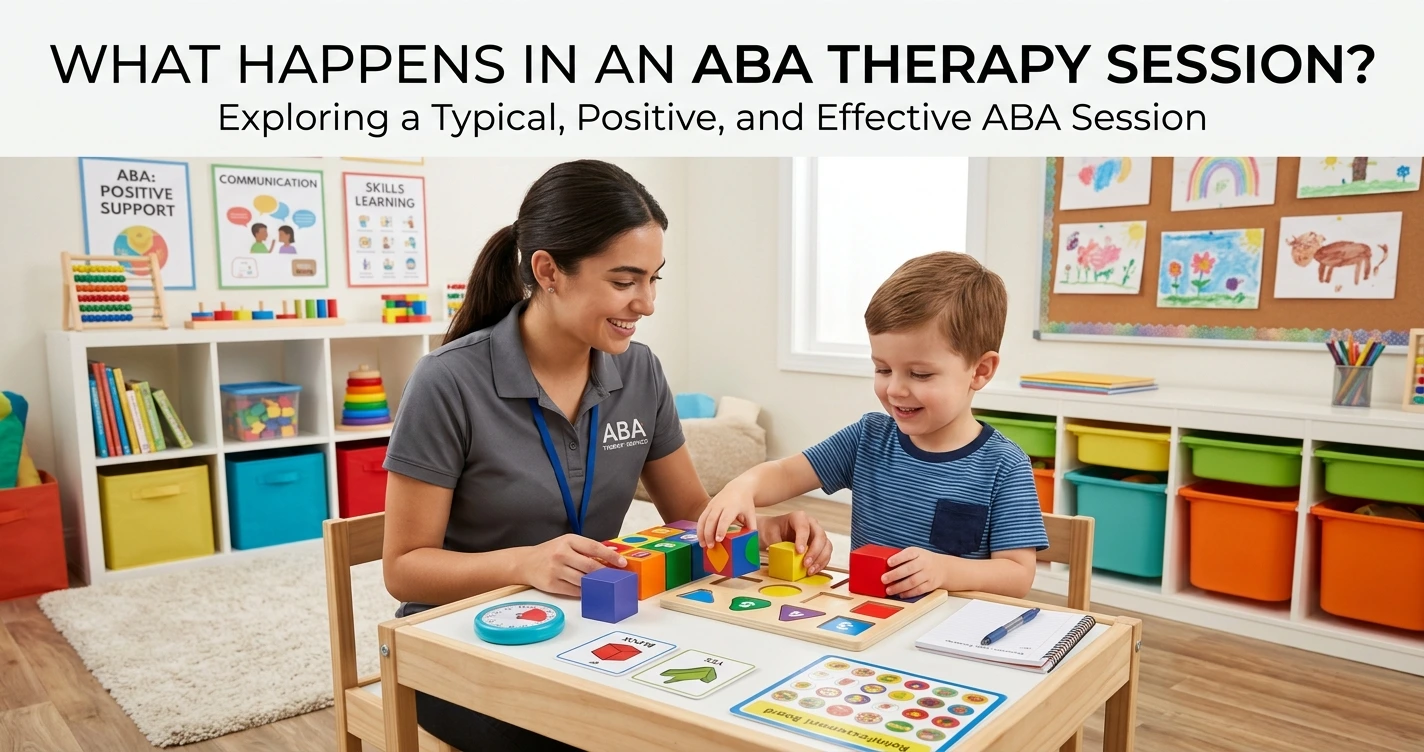
It can be new to parents to start an ABA therapy and unfamiliar if they have not seen a session before. Families often ask: What will the therapist do?, what will the child learn?, and will each session be the same? The reality is that sessions in ABA therapy might vary from one kid to another, contingent on their capabilities, goals, individual requirements, and age.
Applied Behaviour Analysis uses structured teaching and daily-life activities to teach children skills they can use in their lives. A session can consist of learning communication, practising social skills, practising daily routines, learning how to respond to instructions, etc. The overall purpose is for the child to develop skills which they can use at home, school and in the community.
Starting the Session
Typically, an ABA therapy session starts by engaging the child and making them comfortable and familiar. The therapist will talk with the child, observe how the child behaves, or start an activity the child likes.
Start with something familiar to set a positive tone. The therapist can also review what happened in the past few sessions and whether the child’s schedule or needs have changed.
A session doesn’t start with sitting and a lesson. It’s vital to build comfort and engagement through play.
Reviewing the Child’s Goals
Applied behavior analysis goals are typically individualised. These goals are based on the child’s needs for assistance.
For example, a child’s objectives could be:
- Communication
- Following instructions
- Social interaction
- Playing appropriately
- Self-care skills
- Daily routines
- To decrease activities that distract the learner from the learning process
The therapist strives to meet these goals during activities within the child’s ability. The approach can be modified as needed as it is monitored over time.
Learning Through Activities
Much of an ABA therapy session focuses on skill teaching through practice. The therapist might divide up a challenging skill into smaller steps to help the child understand and practice each step.
For example, when the therapist wants to teach the child handwashing, he might teach the child to turn on the water, apply soap, rub their hands, rinse, and dry.
The therapist can prompt the child as needed. The more the child can do it independently, the less the therapist will prompt them.
Using Positive Reinforcement
Another more common aspect of applied behavior analysis is positive reinforcement. If the child responds correctly or uses a desired skill, the therapist may reward them for doing what is wanted.
This might be praise, a favourite activity, a toy or any other suitable reward.
By applying structured Schedules of Reinforcement, therapists help the child understand that using the new skill can lead to a positive outcome. Each child’s preferences are taken into account, as different things may motivate one child but not another.
Communication Practice
Communication may be a focus point of the ABA session. Children may be developing or using spoken language, or gestures, pictures, sign language or communication devices.
A therapist may help a child ask for a toy, ask for help, answer questions, or let the therapist know they would like a break. Communication skills help children articulate their needs rather than resorting to frustration when they cannot communicate.
Social and Play Skills
Certain sessions include activities designed to foster social interaction and appropriate play.
The therapist can practice:
- Taking turns
- Sharing
- Engaging with others (listening and speaking)
- Starting an interaction
- Playing simple games with rules
- Proper use of toys to play with
Practices can be provided through games and activities that do not feel like a tedious chore or constant formal learning, but feel natural.
Managing Challenging Behaviours
Another type of behaviour a child may work to change with an ABA therapist is behaviour that interferes with learning or daily activities. Typically, the emphasis is on understanding what precedes and follows a behaviour.
For example, when a child is asked to cease a favourite activity, they might get upset. The therapist can model a different response, such as requesting time to respond or a break.
Beyond simply stopping a behavior, effective intervention often guided by Task Analysis in ABA focuses on teaching an alternative skill that helps the child communicate or cope with the situation.
Breaks and Preferred Activities
Children may take breaks during an ABA therapy session, especially when they need to rest or when something is difficult.
Some activities can be incorporated into teaching by using the book of preferred activities. A therapist may use a child’s favourite game, toy, book, or activity to encourage participation.
To keep the session interesting for the child, this can help keep them engaged in the learning process.
Recording Progress
The therapist may gather information during sessions to determine how the child is making progress toward their objectives. They can document successful responses, prompts required, or the frequency of a behaviour.
This helps the therapy team identify what is effective and what may need improvement.
Parents can also be informed of the exercises their child practised and their reaction to them during the session.
Involving Parents and Caregivers
Parent/carer involvement can assist children to apply their skills beyond therapy. A therapist can discuss with families strategies that they can use in their normal routine.
The same skill taught in therapy can be practised at home when eating, playing, or putting on clothes; for example, if a child is being taught to ask for assistance.
These ABA strategies for parents encourage practising skills across different settings, helping children build independence in everyday life.
Final Thoughts
An ABA therapy session is not just a child sitting at a table answering the questions. It might involve play, learning, practising communication, daily living activities, social activities, breaks and structured learning, depending on the child’s objectives.
Quality ABA services in Maryland are built around each child’s unique needs and progress. By encouraging children to practise with the right support and caregiver involvement, they can work towards acquiring meaningful skills in their day-to-day life.